Fire Resistant Roller Shutters: A Practical Guide to Performance + Compliance
by Kimal Wasalathilake
Why Do Roller Shutters Matter?
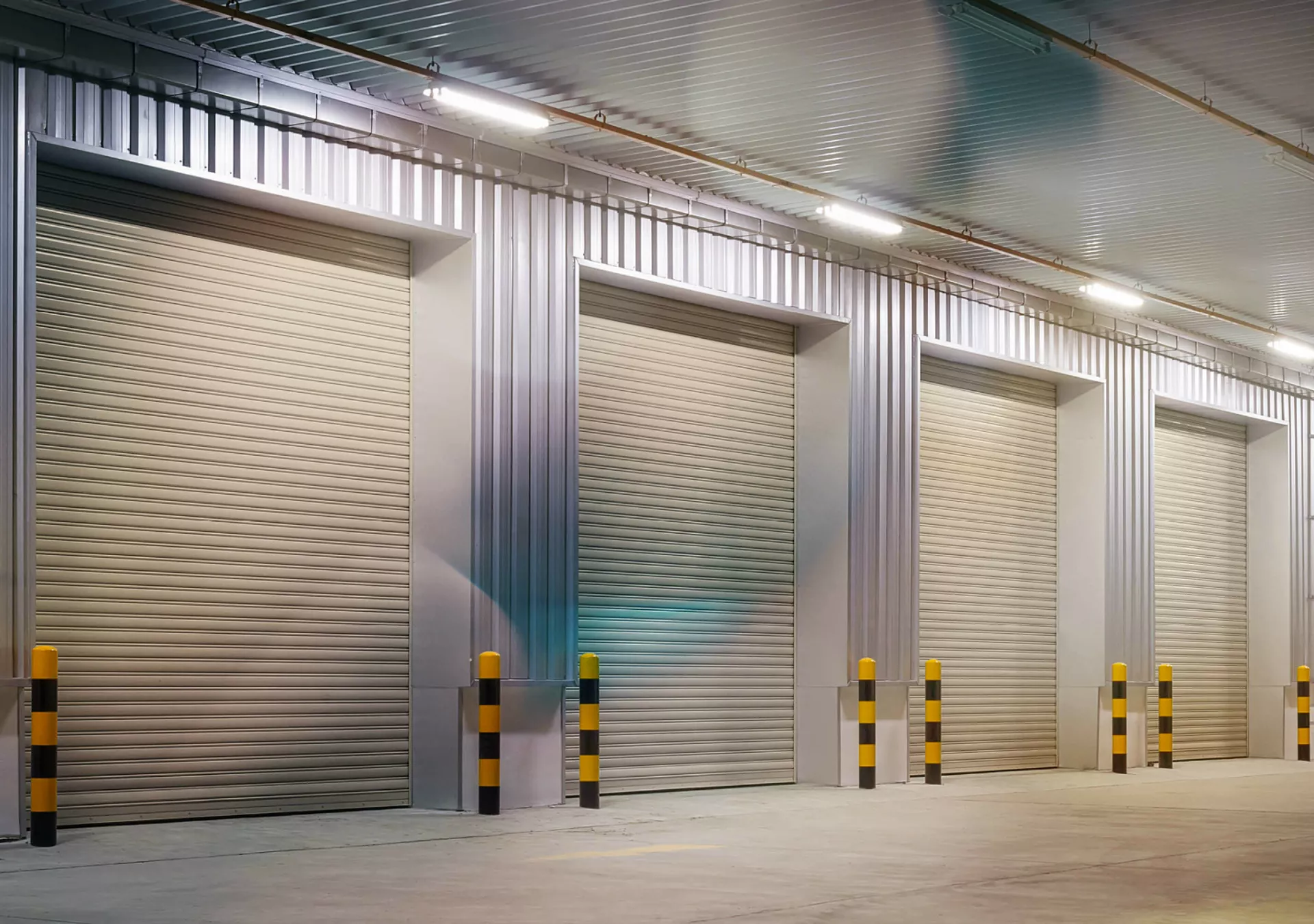
Fire-resistant roller shutters are designed to protect openings and provide fire separation where conventional fire doors are not suitable – such as large retail frontages in shopping centres or loading docks. They are often the preferred solution in settings where clean lines and clear sightlines are important, including workshops, schools, factories, warehouses and airport terminals.
When a fire occurs, a fire-resistant roller shutter must perform two critical functions:
- Self-close reliably – The shutter must descend in response to a heat detector, fusible link or building-management-system (BMS) signal, even in the event of a mains power failure.
- Contain the fire – The entire system must maintain its integrity and, where applicable, insulation for the specified Fire Resistance Level (FRL).
Although fire shutters are engineered products and systems, there is no single design standard that outlines their performance through design or provides a performance-based pathway to determine fire resistance. Therefore, once a shutter is designed, it must be tested to demonstrate compliance with the prescriptive fire separation requirements mandated by the building code.
The outcomes above can only be assured if the entire assembly – including the curtain, barrel and shaft; vertical guides; end plates; bottom bar; fixings; and release mechanism – successfully passes a full-scale fire test as one integrated system or specimen.
Anatomy of a Roller Shutter and Why Each Part Matters in the Furnace
| Component | Furnace Stresses | Typical Failure |
Curtain (single‑ or twin‑skin, insulated or non‑insulated) | Direct flame + radiation | Slats distort, gaps open, insulation slumps |
| Vertical guides | Restrain hot, expanding curtain | Bowing jams the curtain; welds or anchors fail |
| Barrel/shaft | Bending, torsion, bearing seizure | Sag prevents full closure |
| Test outcome | May not result in flaming/ visible fire | Requires fully developed fire condition |
| End plates | Carry barrel + curtain weight | Bolt tear-out, plate buckling |
| Bottom bar | Final seal, impact | Warping or rebound compromises the seal |
Insulated vs. Non-Insulated Shutters - Performance Differences
| Attribute | Non-Insulated Curtain | Insulated Curtain |
| Typical FRL | -/120/- or higher (integrity only) | -/120/120 or higher |
| Weight | Lighter – easier to retrofit | Heavier – larger motor and barrel |
Temperature rise on unexposed side | May exceed 180 °C within 30–60 min; NCC may accept if only integrity is required | Keeps temps <140 °C for full rating |
Australian compliance requirements
The National Construction Code (NCC) sets out minimum compliance requirements for fire-rated roller shutters. The two main standards referenced are:
- AS 1905.2:2005 – Establishes the design, construction and installation requirements for vertically operating fire-resistant roller shutters. Mandates that compliance be demonstrated through prototype testing.
- AS 1530.4:2014 – Defines the standard fire-resistance test method using a full-scale furnace and a controlled time–temperature curve. Outlines the scope of "permissible variations" that may be assessed without the need for additional testing.
Evidence of Suitability + Fitness for Purpose Pathways Under NCC 2022
| NCC Reference | What it Covers | Practical Meaning for Shutters |
Part A5 (General Provisions) | A5G1 – Fit for purpose; every product must perform as intended. A5G3 – Evidence of suitability lists acceptable evidence ( ATL reports, certificates, etc.). A5G5 – Fire resistance where a DTS provision requires an FRL, an Accredited Testing Laboratory (ATL) must show the element is either identical to a tested prototype or different only “to a minor degree.” | Prototype test or ATL assessment based on test data are the only two admissible pathways. Marketing brochures do not qualify, |
Specification 12 – S12C5 (Fire shutters) | Detailed DTS requirements for fire shutters, including: Mandatory compliance with AS 1905.2 for design, installation + labelling. Prototype test to AS 1530.4 for the nominated FRL. | S12C5 tells certifiers exactly what a compliant shutter looks like and points them back to AS 1905.2 + AS 1530.4 for proof. |
As Jensen Hughes is a NATA-accredited ATL, our full-scale test reports and engineering assessments satisfy A5G3 (1)(d) and A5G5 and demonstrate conformity with Specification 12, clause S12C5.
Compliance Roadmap (Australian)
Prototype Type Testing
Conduct a full-scale test to AS 1530.4 (or equivalent) with the complete assembly – curtain, guides, barrel, end plates and release gear – exposed to the furnace.
A Type Test means a test and evaluation that determines whether the shutter had been tested to in accordance with the test standard. It is an initial or point-in-time conformity measure, distinct from ongoing surveillance product testing that is part of a product certification scheme. For more on that, please visit the Jensen Hughes Fire Certification Page.
Assessment for variations
Carry out a formal assessment to determine and demonstrate the performance of variations to the tested system. This may include variations in overall shutter opening size, slat type, brackets and guide rails.
Labelling + installation
Clearly label each shutter in accordance with AS 1905.2, including the FRL, test reference and installer identification.
Routine inspection
Maintain compliance through six-monthly drop tests and annual barrel alignment checks in line with AS 1851.
Approval Routes Beyond Australia
| Market | Primary Recognised First Test Method(s) |
| New Zealand | AS 1530.4:2014/NZS 4520 (doorsets + shutters) |
| Malaysia | MS 1073 Part 3: 1996 (Amd. 1:2003) |
| Singapore | SS 489:2015+C1:2017/BS EN 1634-1:2014+A1:2018 |
| Hong Kong | BS 476 Part 22: 1987/BS EN 1634-1:2014+A1:2018 |
| Macau | EN 1634-1 |
| India | IS 3614:2021 |
| USA/Canada | UL 10B/NFPA 252 |
| UK/EU | BS 476 Part 22: 1987/BS EN 1634-1:2014+A1:2018 |
Oversized Shutters – Why They Matter and How Jensen Hughes Provides a Solution
While fire shutters are tested for compliance with relevant standards regarding size, the maximum testing size is often limited by the dimensions of the furnace. However, modern designs frequently demand large, column-free openings that can span up to 15 meters wide by 8 meters high. These fire shutters can weigh several tonnes. Unfortunately, the sheer size and significant weight of such shutters make it impractical to test them within current furnace limitations and the cost for constructing the necessary testing infrastructure is extremely prohibitive.
At Jensen Hughes, we bridge this gap by linking baseline test data to larger geometries through advanced fire testing assessments to determine and demonstrate the performance of oversized shutters.
- We begin with the largest feasible furnace test to capture worst-case thermal exposure and deflection behaviour.
- We then extrapolate to larger widths, heights or alternate slat profiles using industry-accepted laboratory specific fire testing and assessment standards, as well as structural engineering methods, accounting for the reduction in steel strength at elevated temperatures. Some of the recognised frameworks we adopt include:
- PFPF Guide to Undertaking Technical Assessments of Fire Performance
- EN 15725:2023 – Principles of EXAP reports
- EN 15269-10:2011 – EXAP for steel rolling shutters
- Deliver a comprehensive assessment report specifying allowable configurations, including barrel diameter, shaft size, end plate thickness, anchor type and spacing and slat limitations – provided in width and height increments up to the required maximum opening.
Why Clients Choose Jensen Hughes?
Accredited laboratory
Jensen Hughes Fire Testing is a NATA-accredited laboratory offering fire resistance testing in accordance with AS 1530.4 and a range of equivalent international standards. This accreditation also allows us to provide evidence of suitability and fire certification documentation outside Australia through mutual recognition agreements. These agreements extend to accreditation bodies such as International Accreditation New Zealand (IANZ), Standards Malaysia (MS), Hong Kong Accreditation Service (HKAS), Singapore Accreditation Council (SAC) and Korea Laboratory Accreditation Scheme (KOLAS).
Assessment expertise
Our dedicated team of fire engineers specialises in preparing technical assessments in line with applicable standards, methodologies and recognised protocols.
Global standards coverage
We prepare assessments for oversized roller shutters to AS 1530.4 as well as major international standards including BS 476 Part 22, MS 1073 Part 3, SS 489, IS 3614, EN 1634-1 and others – ensuring your compliance package supports local and international projects.
Time + cost efficiency
By leveraging existing test data and applying engineering-based assessments, clients often avoid up to 80% of the full-scale furnace tests they originally anticipated – reducing both timelines and costs.
Conclusion
Fire-resistant roller shutters are mission-critical life safety systems. Achieving approval – especially for oversized configurations or projects spanning multiple code jurisdictions – requires a partner with deep expertise in testing, assessment and regulatory nuance.
At Jensen Hughes, we combine accredited full-scale testing with standards-based engineering assessments to transform a single prototype into a fully compliant fleet – whether you are building in Sydney, Singapore or Mumbai.
Let us help you move from concept to compliance – first time, every time, worldwide. Contact pacific@jensenhughes.com or +61 3 9767 1000 to start the conversation.

Kimal Wasalathilake
Kimal Wasalathilake is a Senior Fire Safety Consultant based in Brisbane, bringing several years of experience in the broader fire industry to his role at Jensen Hughes. Specialising in passive fire protection, he possesses a comprehensive…
Related Insights


Blogs + Whitepapers