Product Certification: Getting More Value from Your Testing Investment
by Alim Rasel
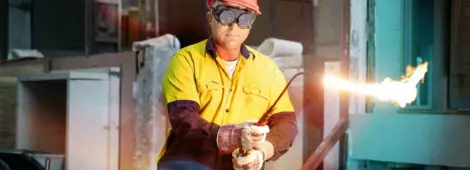
For many manufacturers, fire testing and assessment represent a significant investment of time, expertise and resources. Testing programs often take months to plan and complete, requiring technical review to establish and support a product’s performance.
If your products have already been fire tested or assessed, you may be closer to product certification than you think.
From Test Evidence to Product Certification
Fire test reports demonstrate how a product performed at the time it was tested. Assessment reports can extend the application of that evidence to defined variations or configurations.
For many manufacturers, product certification is a natural next step.
While testing and assessment establish product performance, product certification provides ongoing verification that the product being supplied remains consistent with the evidence supporting those performance claims. Certification introduces independent oversight to manufacturing controls, traceability and conformity processes to provide confidence that products continue to meet the requirements of their certified scope.
For manufacturers who already hold fire test reports and assessment evidence, much of the technical groundwork may already be in place. Existing evidence can be used as part of the certification process, subject to review against the relevant FireMark technical schedule and certification requirements.
Building on Existing Evidence
One of the key advantages of product certification is that it is designed to leverage credible evidence rather than duplicate it.
Where suitable testing and assessment documentation already exists:
- Existing fire test reports can be reviewed as part of the certification process
- Existing assessment reports can support the determination of product scope
- Historic test data may be accepted, subject to evaluation by the certification team
Additional testing may only be required where evidence gaps are identified or further verification is needed.
In many cases, the focus shifts from generating new test data to demonstrating manufacturing consistency, traceability and ongoing compliance.
What Additional Steps are Required?
For manufacturers with established test evidence, the certification process typically focuses on:
- Review of existing test and assessment evidence
- Evaluation of the proposed certification scope
- Verification of quality management and factory production controls
- Assessment of product traceability and manufacturing consistency
- Ongoing surveillance and periodic audits
These requirements help provide confidence that the product supplied to the market remains consistent with the product that was originally tested and assessed.
Why Certification Matters
The construction industry is placing greater emphasis on product conformity, traceability and evidence of suitability.
While test reports remain an essential part of demonstrating performance, they represent evidence at a specific point in time. Product certification introduces an ongoing framework that includes independent review, manufacturing oversight and continuing verification. This framework includes:
- Independent assessment of supporting evidence
- Verification of manufacturing controls
- Surveillance audits
- Product traceability requirements
- Public listing on product certification registers
The result is greater confidence that certified products continue to conform to the scope and performance claims on which certification is based.
Could Product Certification Support Product Selection?
In many projects, competing products offer similar levels of demonstrated fire performance. Where technical performance is comparable, other factors often influence product selection.
Product certification can help simplify the way compliance evidence is presented and understood. Rather than requiring stakeholders to review multiple test reports, assessment reports and supporting documentation, product certification provides an independently verified outcome that brings this evidence together within a recognised certification framework.
For builders, certifiers, consultants and building owners, this can make compliance evidence easier to interpret and assess.
Product certification can also help address common questions that arise during project delivery. For example, a certifier or builder may ask whether the product being installed is the same as the product that was originally tested. Product certification schemes generally require controls around product traceability, manufacturing consistency and ongoing surveillance, helping provide confidence that the results are representative of the supporting evidence.
By reducing compliance uncertainty, product certification may help streamline approvals and support confidence in product selection. It can also provide an additional point of differentiation where competing products make similar performance claims.
While product certification does not guarantee specification or selection, it can help manufacturers demonstrate ongoing conformity, reduce compliance risk and strengthen confidence among decision makers and certifiers throughout the construction process.
A Stronger Return on Your Investment
Rather than relying solely on individual reports, product certification combines testing, assessment, manufacturing controls and ongoing surveillance within a single recognised framework.
The outcome is not simply evidence of performance. It is an independently verified demonstration of ongoing product conformity that can help support compliance, strengthen market confidence and differentiate products in a competitive market.
The testing may already be complete. Product certification helps ensure that investment continues to deliver value throughout the life of the product.
Interested in Product Certification?
If you have already invested in fire testing and assessment, product certification may help you maximise the value of that investment.
Jensen Hughes FireMark is an independent third-party product certification scheme operated by Jensen Hughes and accredited by JAS-ANZ. The Jensen Hughes FireMark team can review your existing testing and assessment portfolio and advise whether your products may be suitable for certification, including any additional requirements that may apply.
Contact Jensen Hughes today to discuss how your existing fire testing investment could be leveraged towards Jensen Hughes FireMark product certification.

Alim Rasel
Alim Rasel is a senior fire assessment engineer currently based in Brisbane, Australia. Alim specialises in conducting comprehensive fire assessments for a diverse range of construction elements. His areas of expertise encompass doorsets…
Related Insights


Blogs + Whitepapers