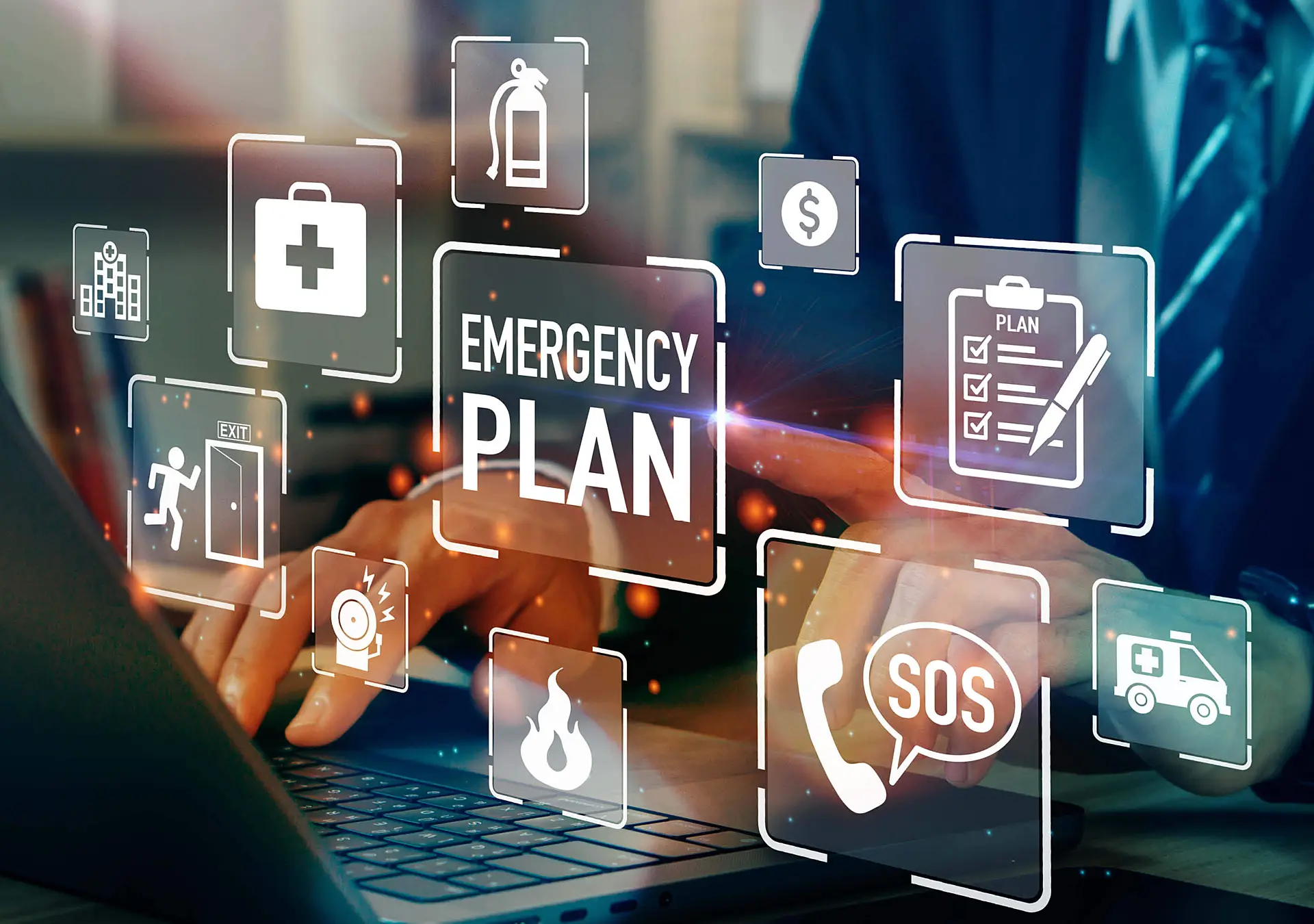
Is Your Organization Ready for British Columbia's Emergency and Disaster Management Act (EDMA)?
by Jens Conzen
British Columbia is modernizing how it prepares for emergencies. The Emergency and Disaster Management Act (EDMA), which received Royal Assent in November 2023 and began coming into force in July 2024, replaces the Province's decades-old emergency management legislation with a more proactive approach focused on prevention, resilience, and disaster risk reduction.
Rather than concentrating primarily on emergency response, the EDMA emphasizes mitigation, preparedness, business continuity, and recovery. The legislation reflects the growing need to address risks posed by wildfires, flooding, earthquakes, cyber threats, infrastructure failures, and other hazards that can disrupt essential services.
What Does the EDMA Require?
The EDMA establishes a framework that allows the Province to require critical infrastructure owners and operators to conduct hazard-specific risk assessments, develop emergency management plans, and maintain business continuity plans. While many provisions of the Act are already in force, implementation continues through a phased rollout of supporting regulations. For example, new regulations for local governments will take effect in January 2027 following an implementation period announced by the Province. Regulations governing certain critical infrastructure owner responsibilities are still under development.
Although not all regulatory deadlines have been finalized, organizations responsible for critical infrastructure should not wait. Developing comprehensive risk assessments and resilient facility designs requires time, coordination, and technical expertise. Early planning can also reduce future compliance challenges as additional regulations are introduced.
Security and Resilience by Design
One of the most significant shifts under the EDMA is its emphasis on reducing risk before disasters occur. While the Act does not explicitly require "security by design," its focus on hazard mitigation and resilience encourages organizations to incorporate safety and security considerations into the design of new and existing facilities.
For critical infrastructure, this may include:
- Security design and physical security assessments
- Fire and life safety system design
- Emergency response planning
- Business continuity planning
- Hazard and vulnerability assessments
- Consequence and risk assessments
- Resilience planning for natural hazards, power disruptions, and operational emergencies
By integrating these considerations during planning and design, organizations can improve operational resilience while supporting future regulatory compliance.
How Jensen Hughes Can Help
Jensen Hughes has decades of experience helping owners, utilities, government agencies, and industrial organizations understand and manage complex risks. Our multidisciplinary teams combine expertise in fire protection engineering, security consulting, emergency management, and risk analysis to develop practical, risk-informed solutions.
Whether your organization is evaluating existing facilities or planning new infrastructure, Jensen Hughes can support:
- Enterprise and facility risk assessments
- Security master planning and security system design
- Fire and life safety engineering
- Hazard identification (HAZID), FMEA/FMECA, and consequence analysis
- Emergency preparedness and business continuity planning
- Resilience assessments for critical infrastructure
- Independent third-party technical reviews
As British Columbia continues implementing the EDMA, organizations that proactively invest in resilience will be better positioned to protect people, assets, and operations while adapting to evolving regulatory requirements.
The EDMA represents more than a legislative update—it signals a shift toward designing safer, more resilient infrastructure from the outset. Organizations that begin preparing today will be well positioned for tomorrow's regulatory landscape.

Jens is VP of our Midwest Region, as well as a Subject Matter Expert in Industrial and Process Safety. He has hands-on experience in various disciplines such as engineering design, international and national engineering standards,…
Related Insights



Blogs + Whitepapers
Blogs + Whitepapers



Blogs + Whitepapers