Latest Projects, Case Studies, Research + Thought Leadership
Select an industry below to explore our latest projects, case studies, insights and thought leadership on the global challenges, trends and policies affecting today's organizations – from regulatory changes to innovative strategies for safety, security, risk-based science, and engineering
At the Governor's direction and the RI Office of the Postsecondary Commissioner, Jensen Hughes is supporting the development and execution of a comprehensive active threat preparedness program for Rhode Island’s colleges and universities.
Discover how RHFAC-certified accessibility experts help create safer, more inclusive spaces by identifying barriers early, applying universal design and improving project quality and user experience beyond basic code compliance.
In this episode, Matt Booth joins host Dan Fogarty to talk through his journey into fire safety engineering, from a mechanical engineering degree and early product side experience with fire rated glazing and curtain systems, to his current role leading the Jensen Hughes ACT team. That practical background shapes the way he approaches engineering today, thinking beyond code compliance. The conversation covers the evolving role of fire safety engineers in the construction industry, the advantage of Jensen Hughes' multidisciplinary structure, and Matt's focus on building strong consultants who communicate as well as they engineer. He also shares a fun fire fact to close: in many fire events, smoke poses a greater risk to life than the fire itself.
Inclusive signage is essential for accessibility, independence and safety in public spaces. Discover how well-designed wayfinding supports people of all abilities and creates more welcoming, user-friendly environments.
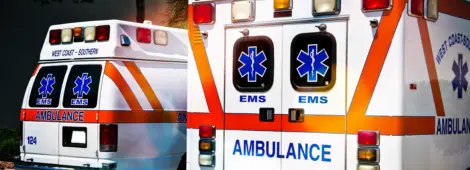
The DEA’s new “Firehouse Rule,” effective March 2026, reshapes how EMS agencies manage controlled substances. Learn key requirements, impacts on fire departments and ambulance services, steps to ensure compliance, and operational readiness.
The 2027 NFPA 30 second draft introduces major updates, including performance-based hazardous area classification, new ignitable liquid drainage floor assemblies, clarified explosion control triggers, and aligned emergency planning.
Explore key questions on evacuation planning, staff training, fire drills, smoke containment and emergency coordination to strengthen resident protection and response.
Fire drills are essential for healthcare safety, yet often cited as deficient in surveys. Learn how scheduling, documentation, varied scenarios, and staff education can ensure compliance and improve real-world emergency readiness.
Learn how dielectric fluids improve heat transfer, limit thermal runaway risk and support high-power performance—plus the costs, safety considerations and challenges of adoption.
Nightclubs present unique fire risks due to high occupancy, low lighting and crowd behaviour. Explore a layered fire safety approach to support timely evacuation and risk reduction.
Learn how gaps between compliance and real-world practice, owner pressures, material choices, and enforcement challenges must be addressed to prevent future tragedies.